
Octopuses
of Cozumel
It was watching me long before I knew it was there.
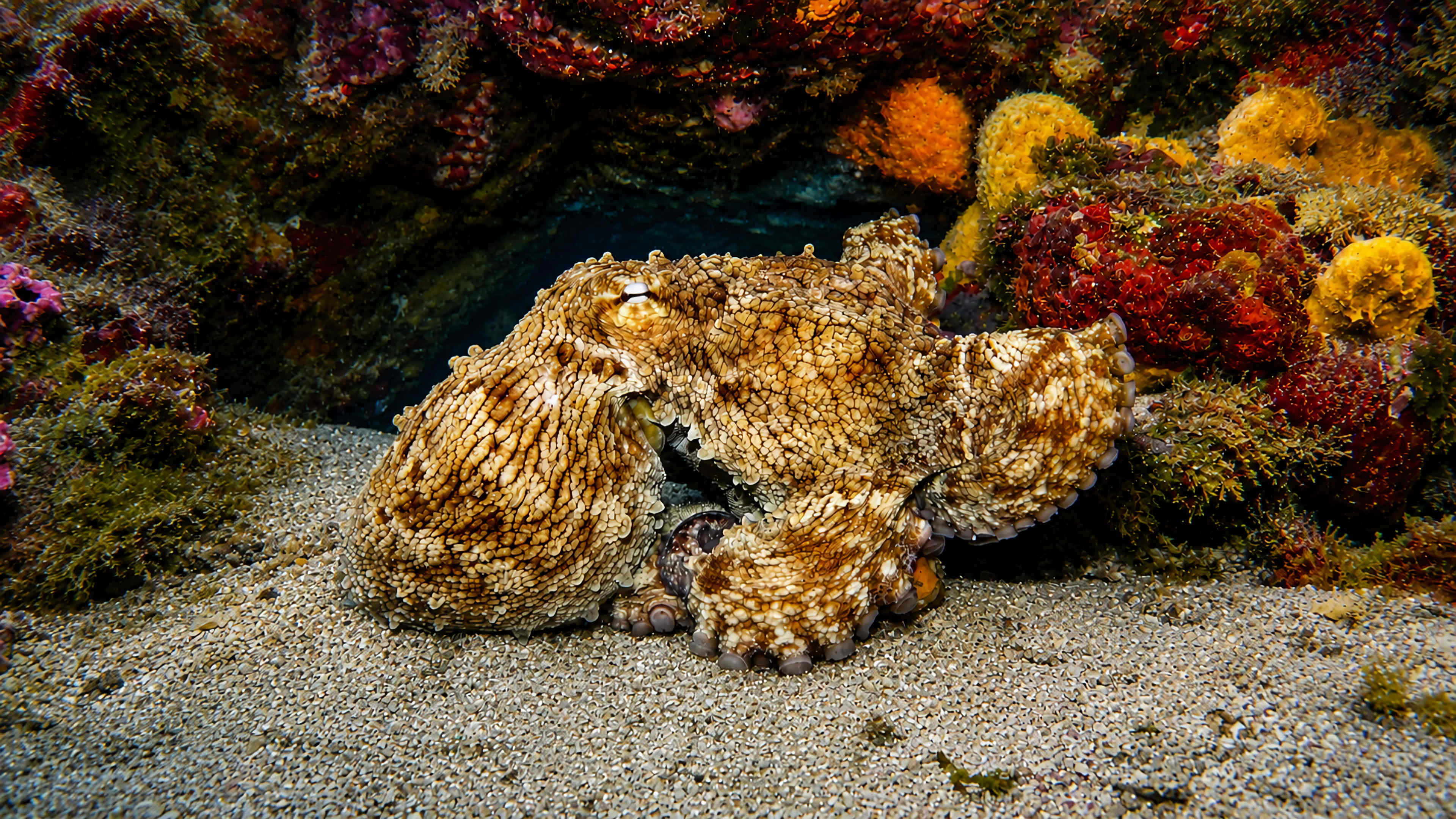
Hidden until it decides not to.
I was not looking for an octopus. I had drifted toward a small ledge hoping to find a moray eel, a drumfish, or another familiar reef resident.
At first I saw nothing unusual. Then one arm moved slightly, and the entire scene changed. What looked like reef became an octopus.
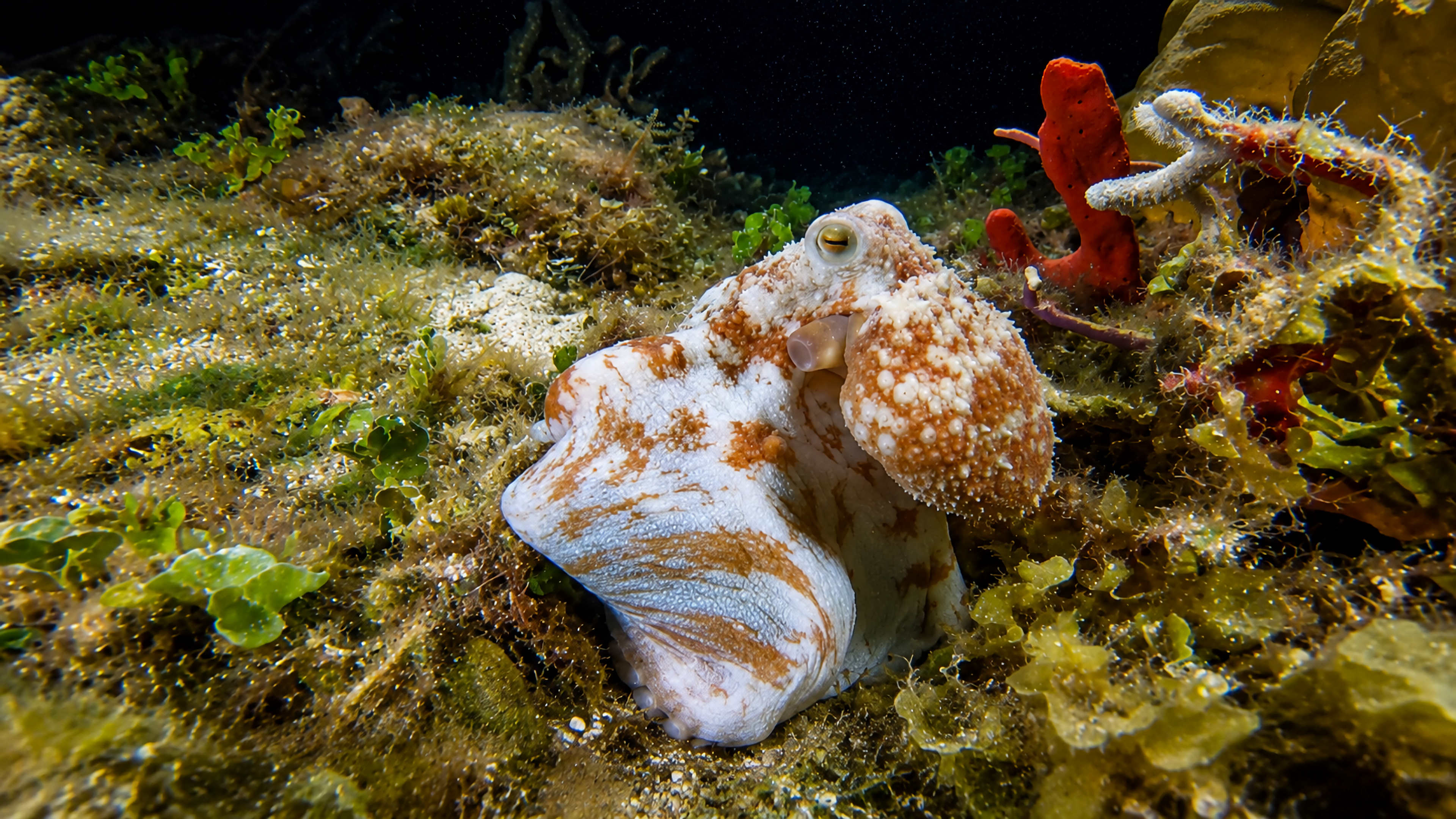
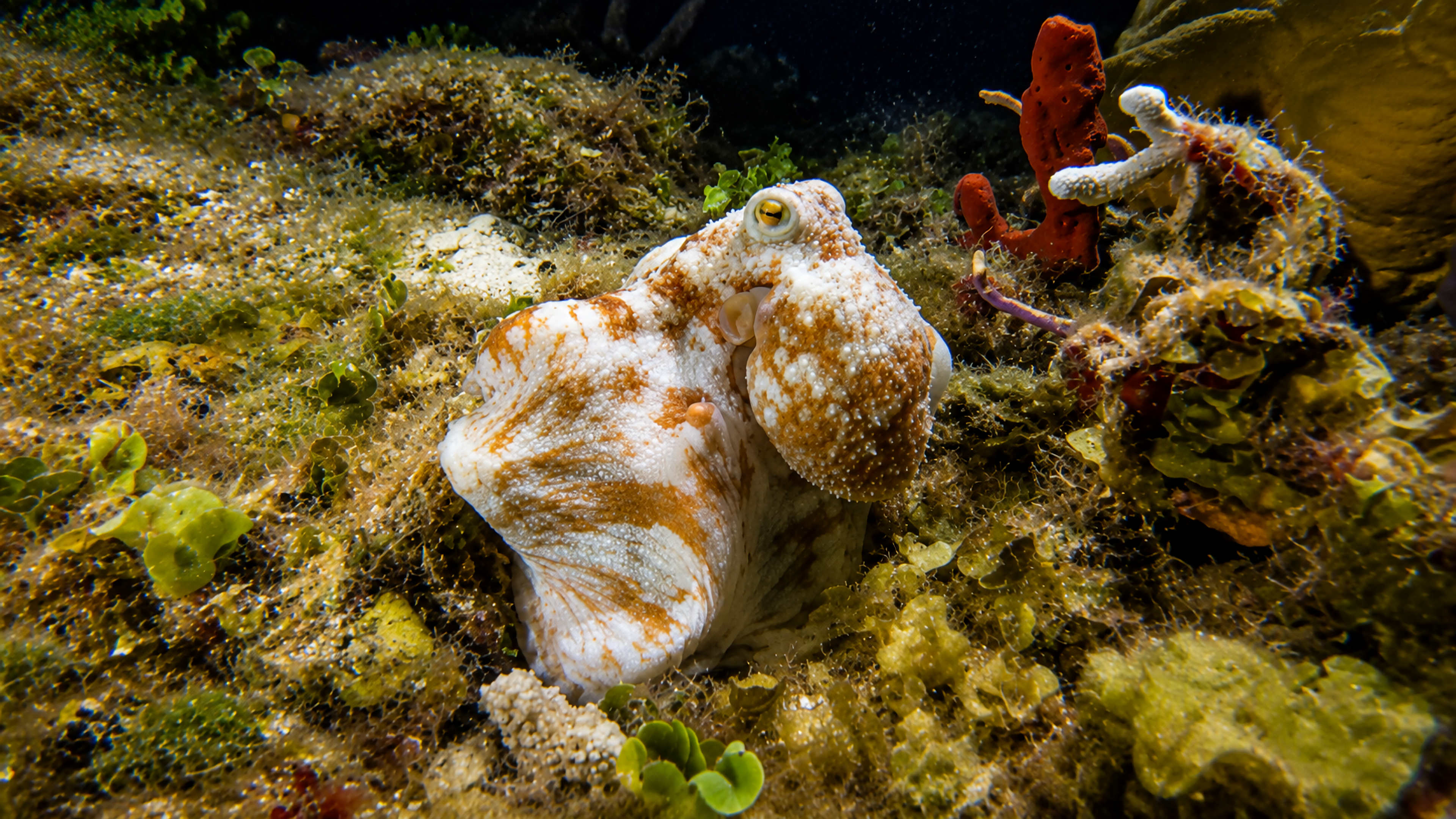
Every movement is deliberate.
An octopus does not swim like a fish. It flows, grips, reaches, and tests the world with its arms.

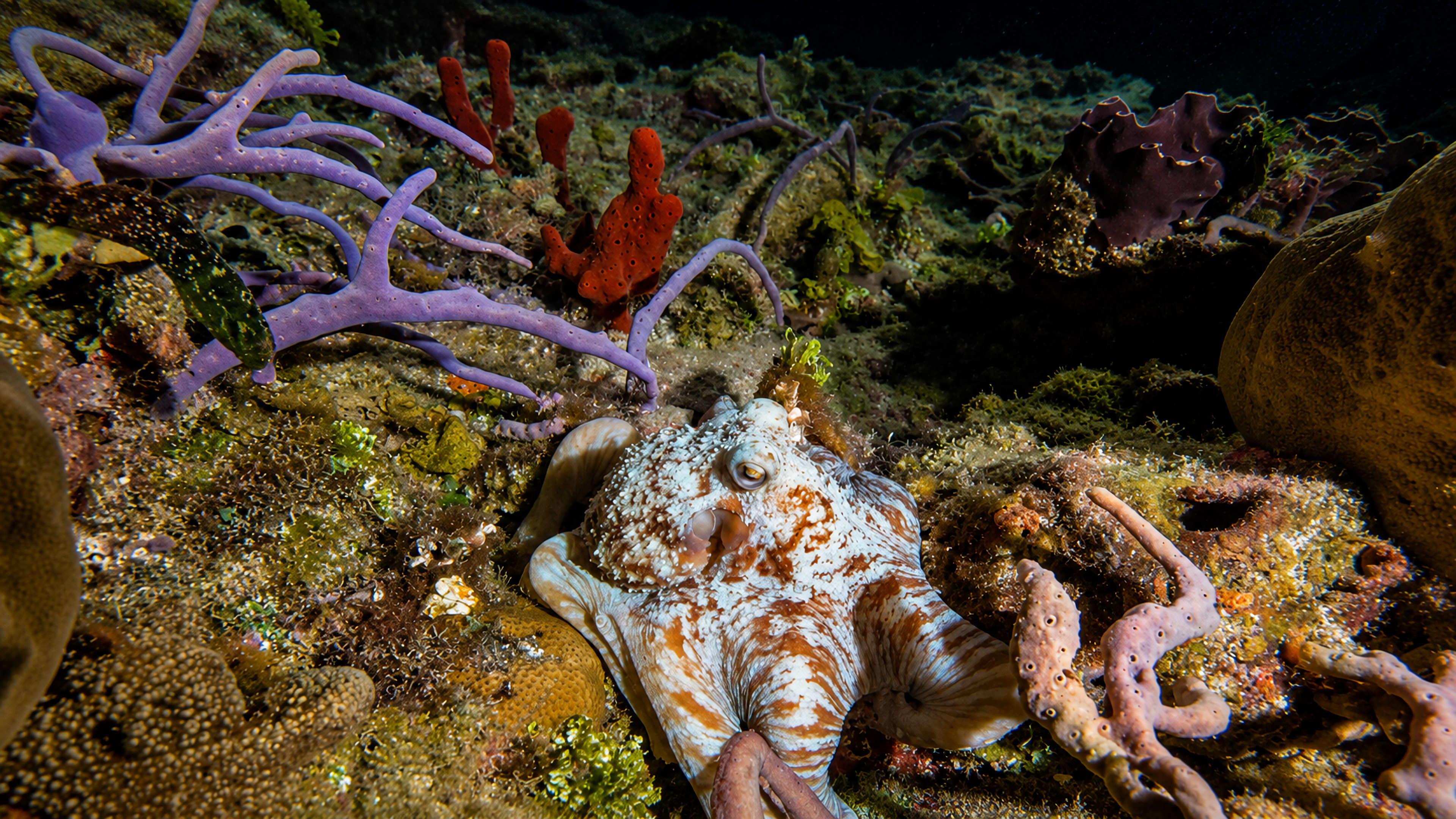
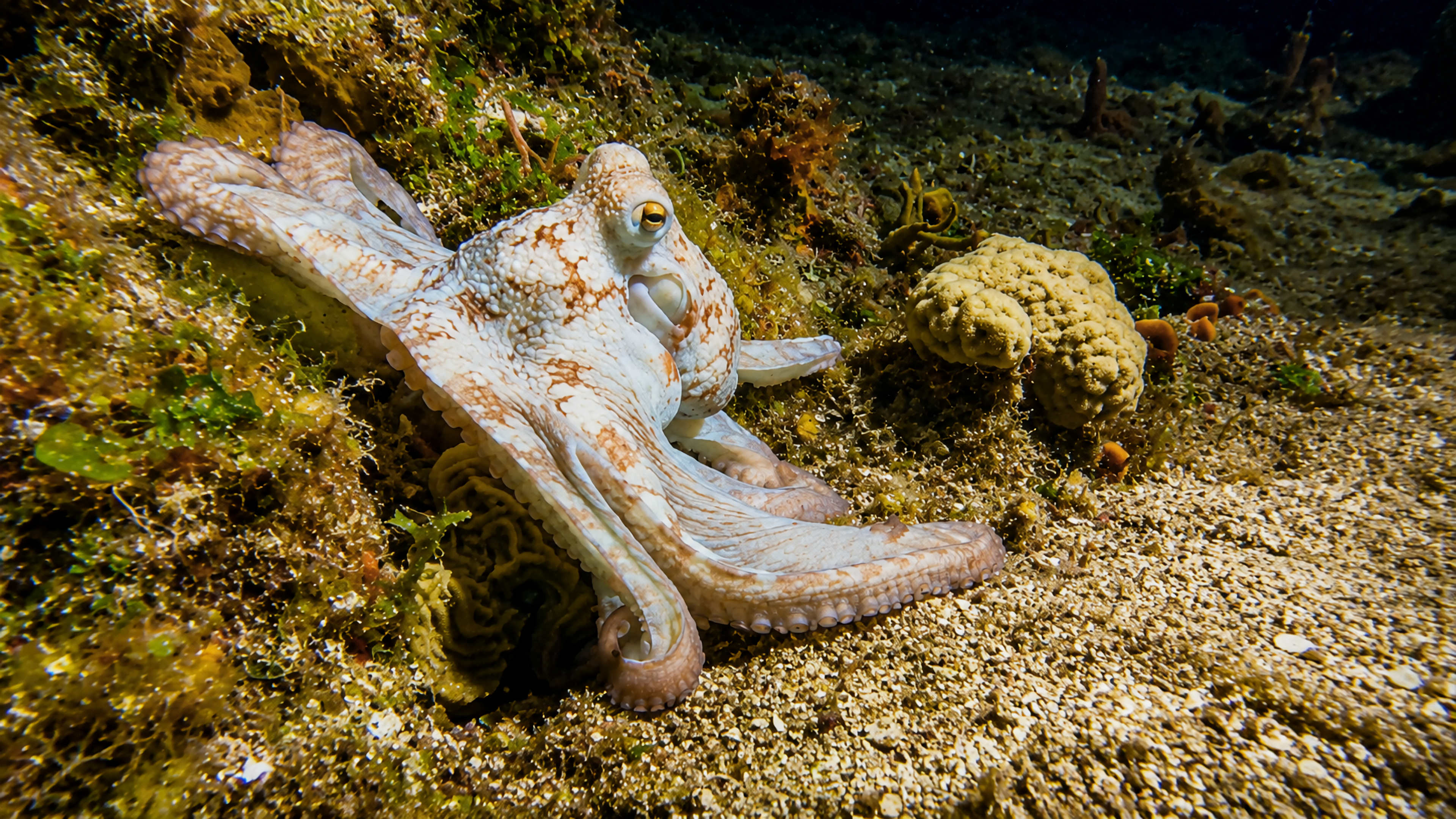
The reef changes after dark.
Octopuses are often more active during night dives. The diver's light reveals a world most daytime visitors never see.
In the beam of a light, the octopus becomes both visible and mysterious. Its color, skin texture, and posture can shift quickly as it moves across the reef.
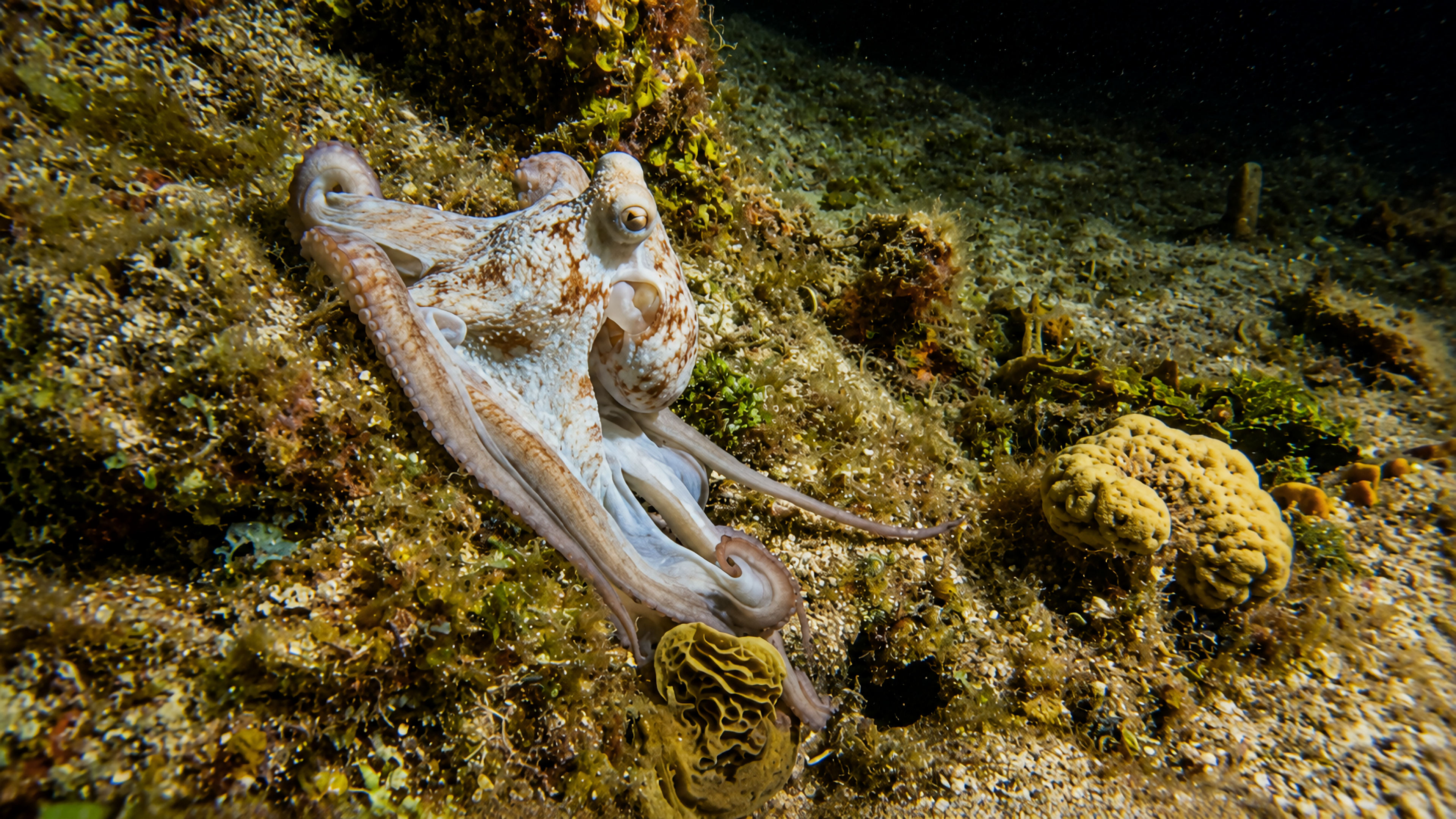
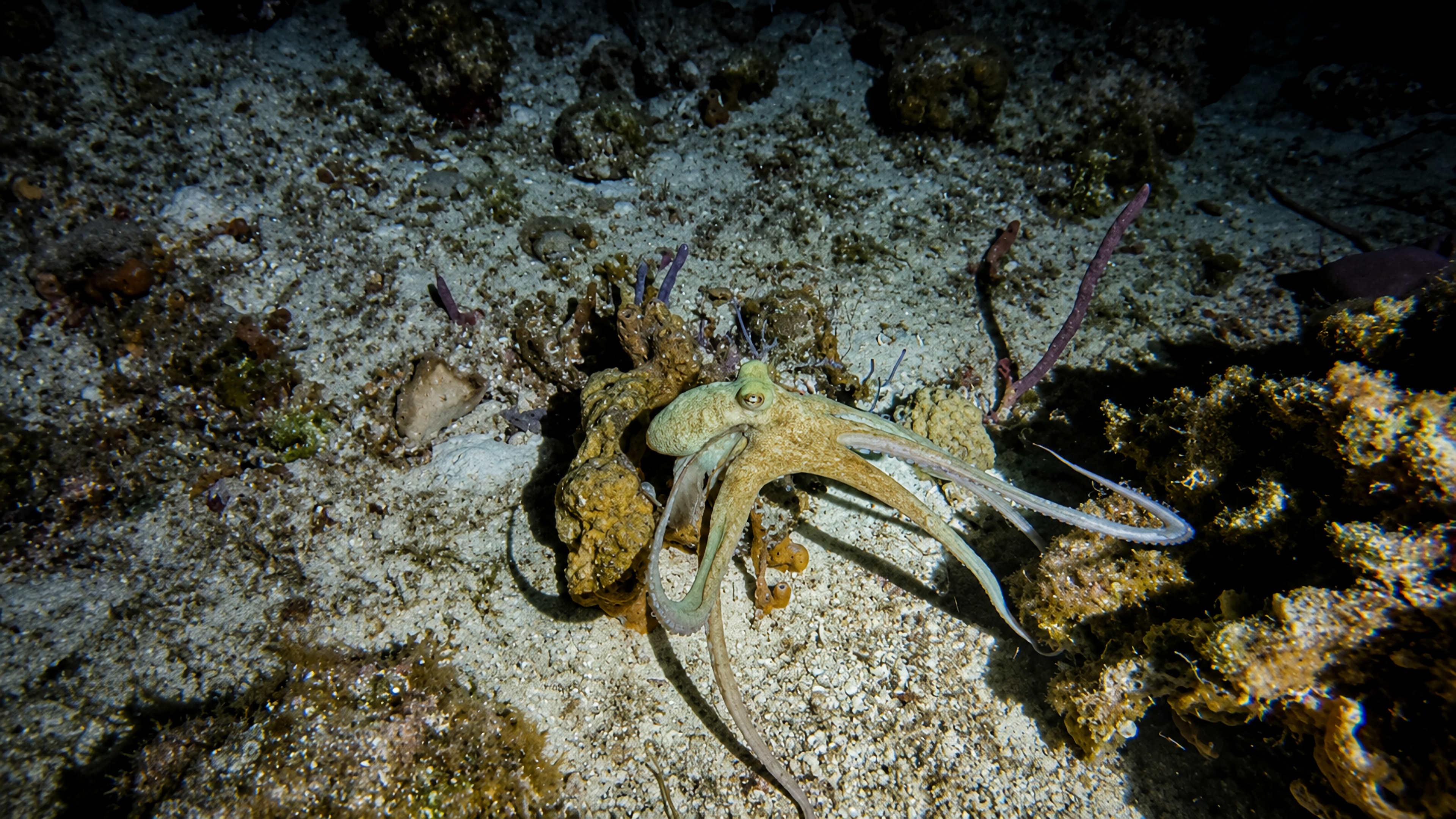
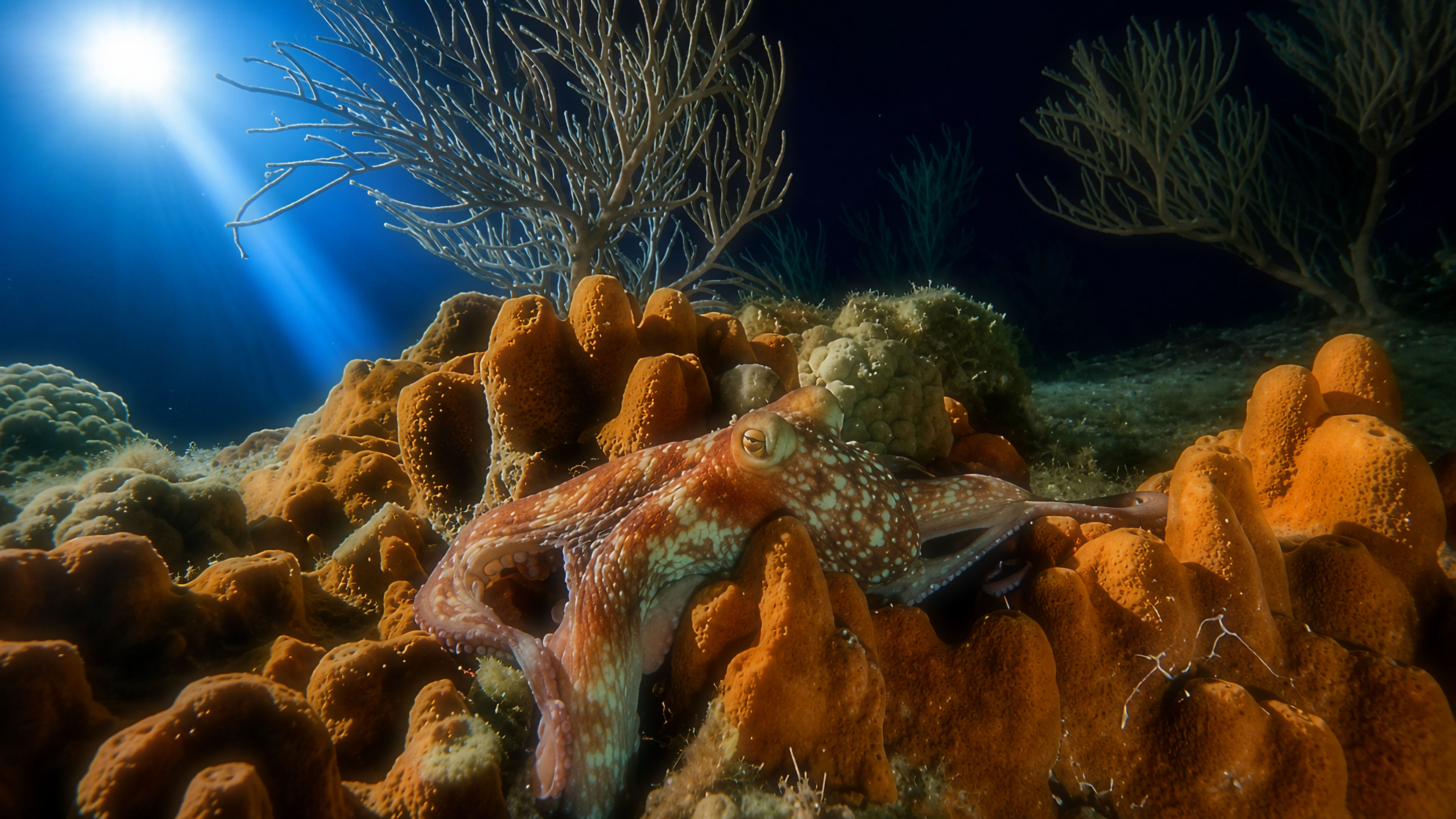
Changing color is
only part of the story.
An octopus can change color, pattern, posture, and skin texture. It can appear smooth one moment and rough the next.
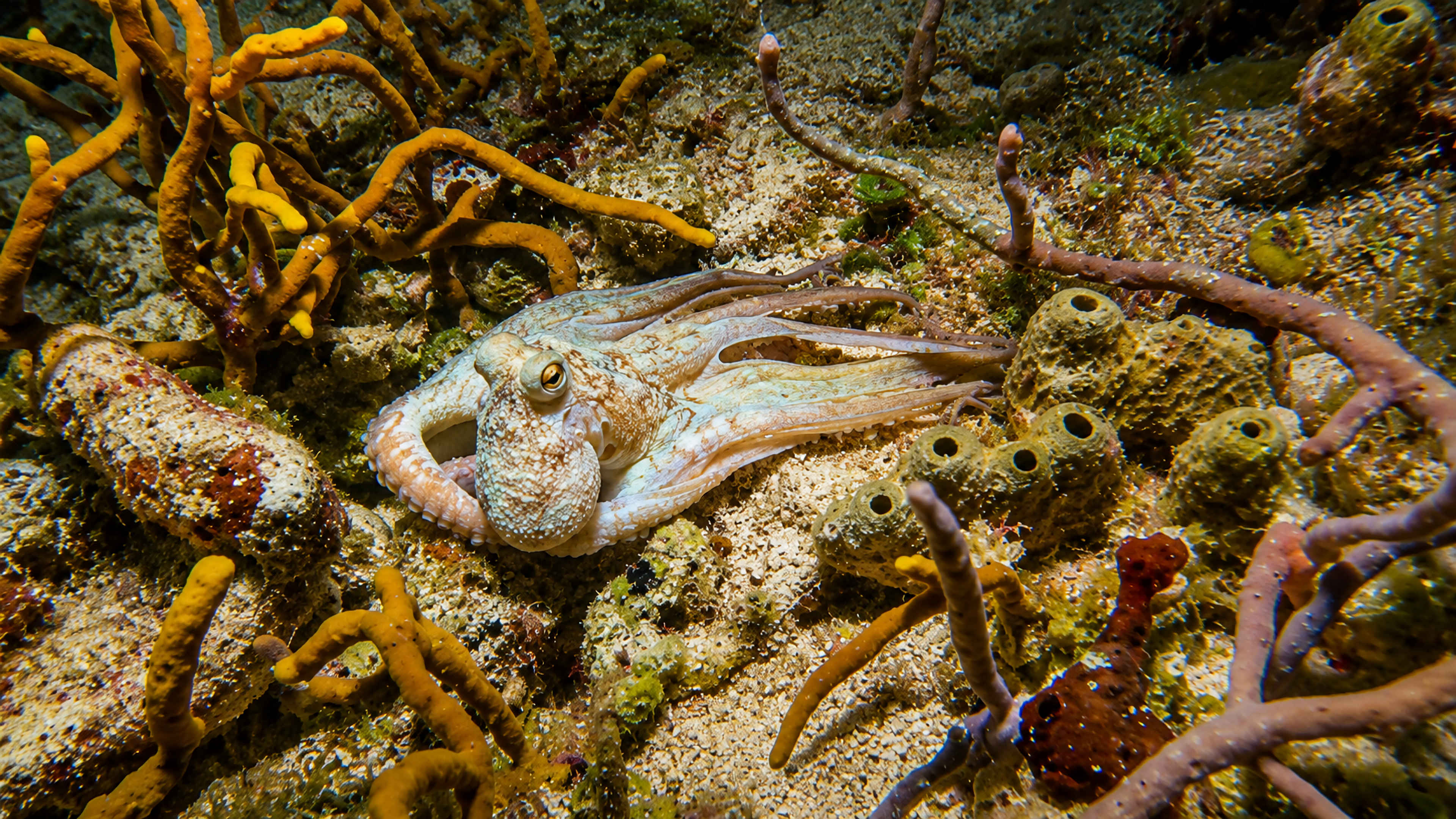
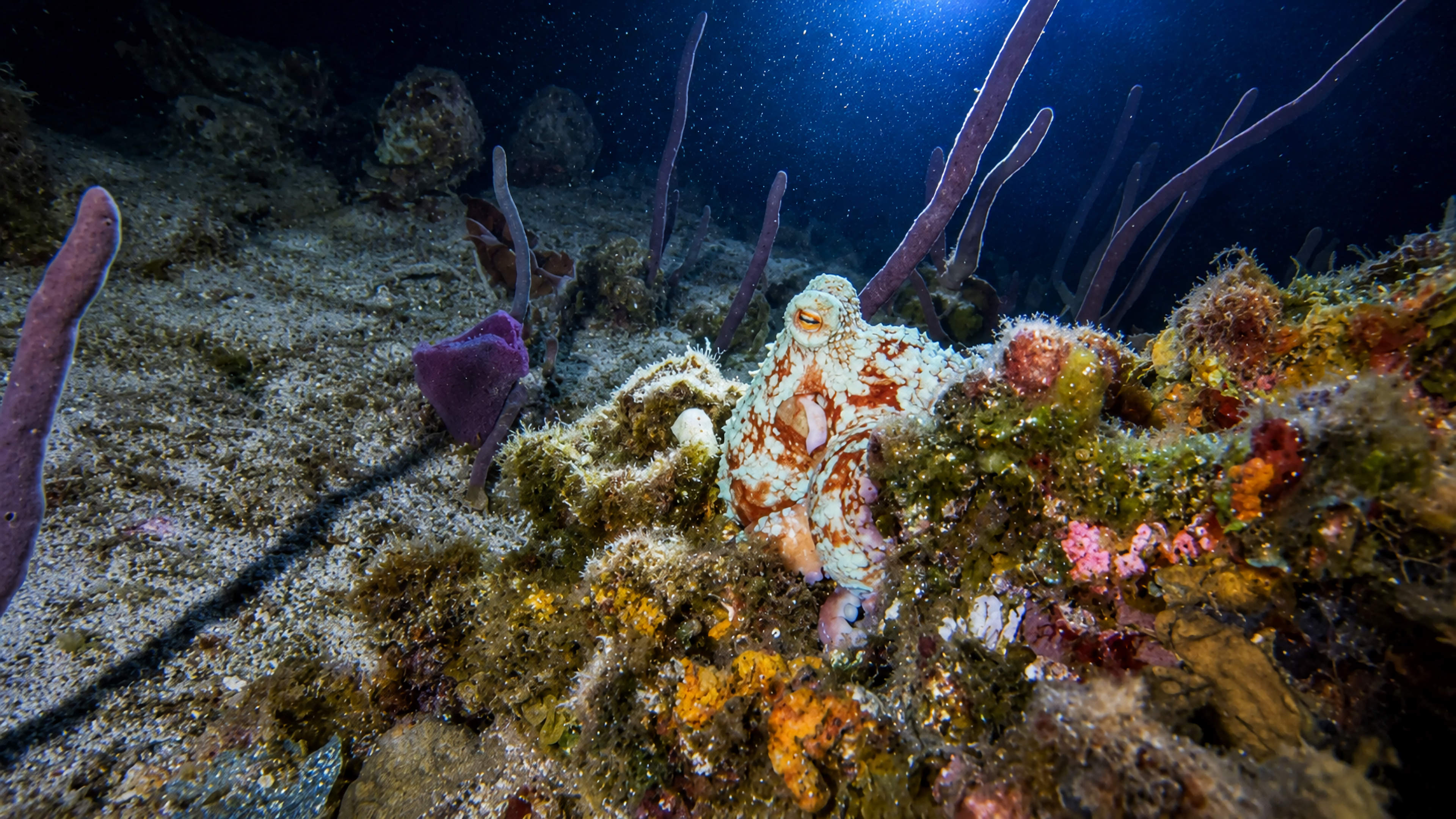
Once you see one, you never look at the reef the same way again.
Octopuses are not rare in the sense that they are absent. They are rare because they are so good at being unseen.
Finding one changes the way a diver looks at the reef. A hole, a shadow, a patch of sponge, or a single eye can become the beginning of a remarkable encounter.
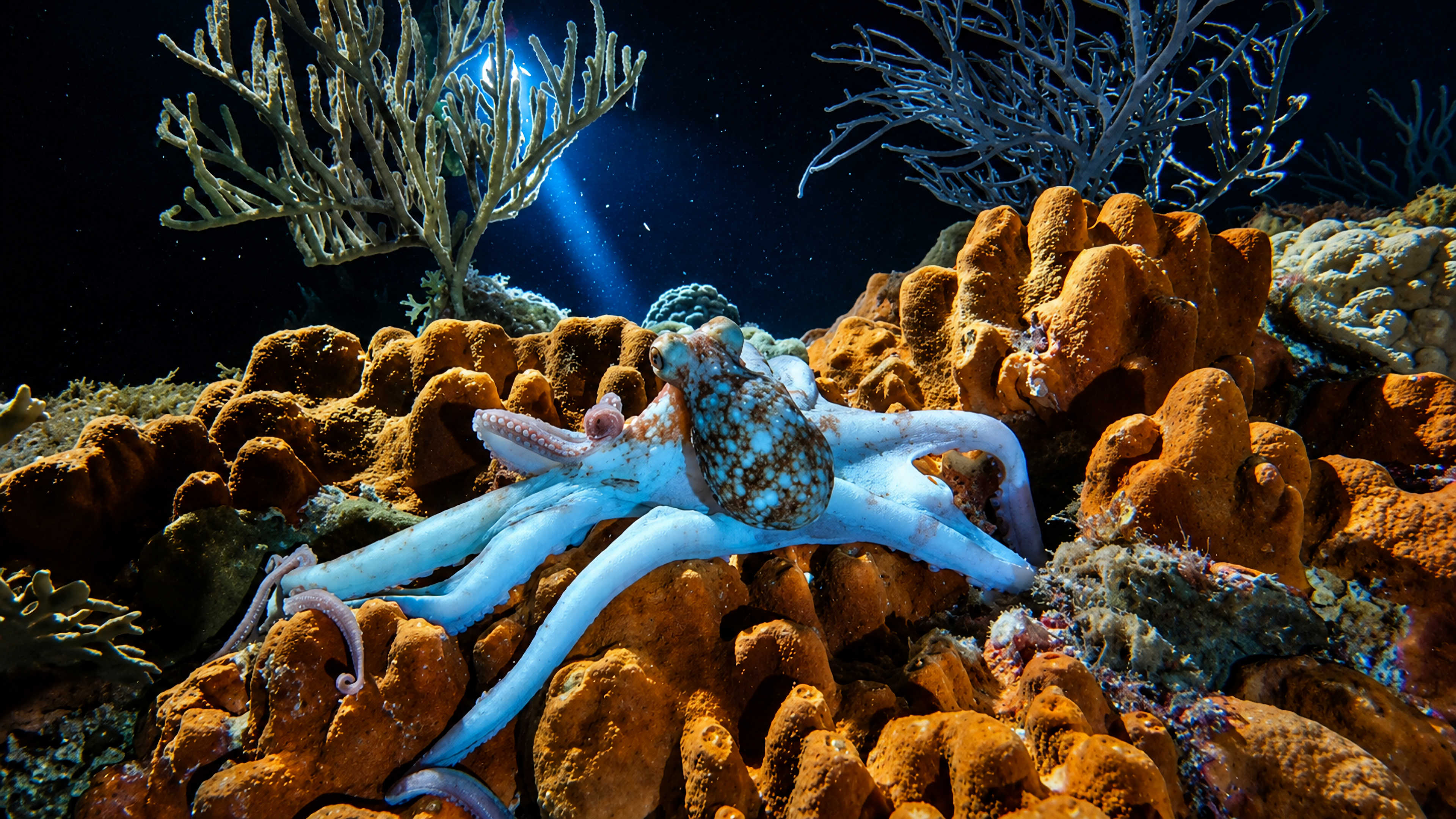
What makes octopuses so fascinating?
They are intelligent.
Octopuses can solve problems, investigate objects, and learn from experience.
They are flexible.
With no bones, an octopus can squeeze into spaces that seem impossibly small.
They are visual hunters.
Their eyes are highly developed, and their arms help them explore the reef by touch.
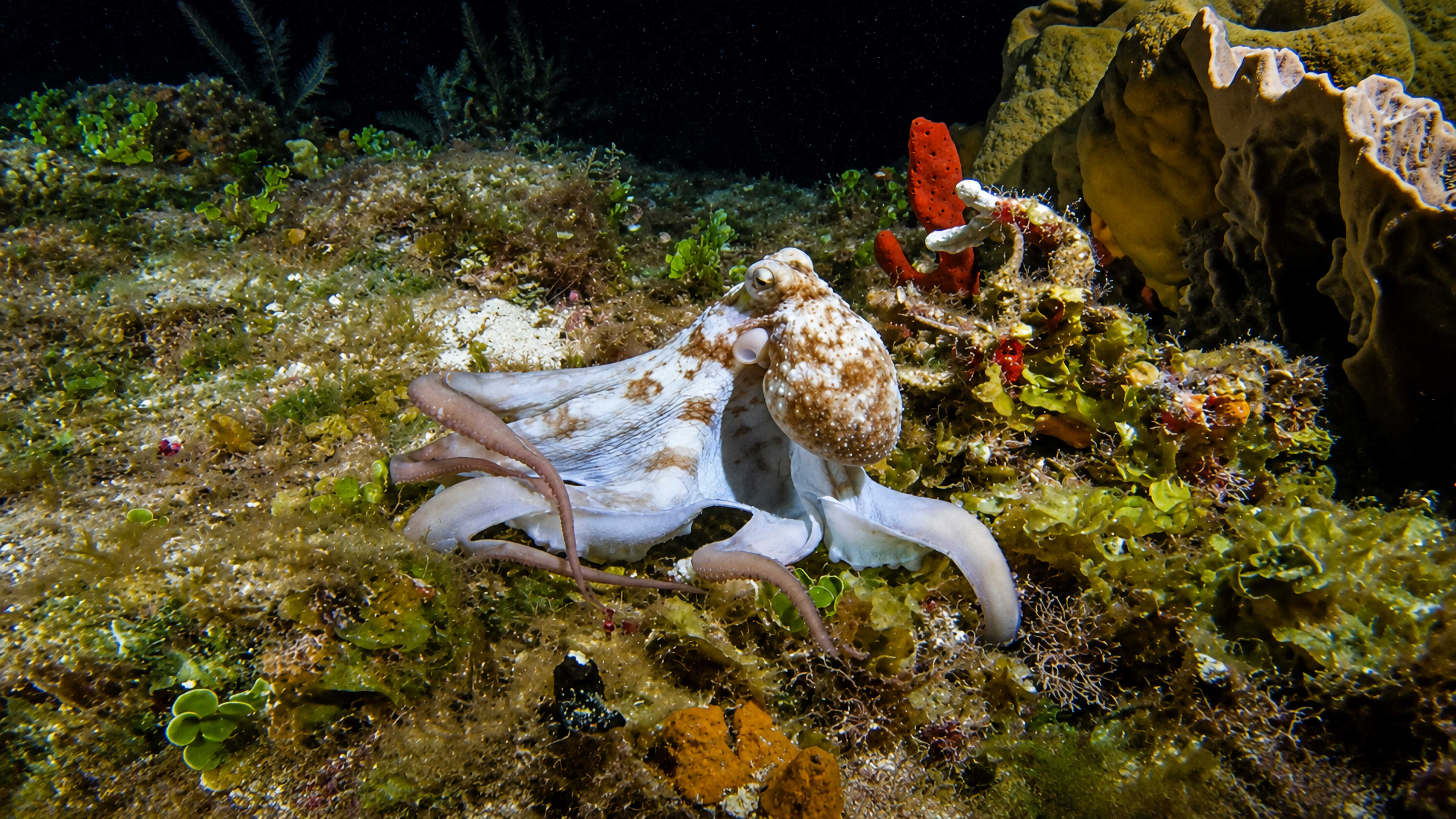
An Encounter Sequence
A visual walk through the octopus encounter, from first discovery to night-dive portrait.
Questions divers often ask
Are octopuses common in Cozumel?
They are present on the reefs, but many divers never see them because they are so well camouflaged and often tucked into reef structure during the day.
Why are they so difficult to find?
Octopuses do not need to swim in the open to be interesting. They often remain close to ledges, holes, sponges, rubble, and shadowed reef structure where their color and texture make them almost disappear.
When is the best time to see one?
Night dives often provide better chances because octopuses may become more active after dark. They can also be found during the day, but daytime encounters often begin with one tiny clue, such as an eye or a slight arm movement.
Why do octopuses change color?
Color changes can help with camouflage, communication, and response to surroundings. They can also change skin texture and posture, which makes them even harder to see.
Can an octopus change its skin texture?
Yes. Octopuses can raise and lower tiny structures in the skin to appear smoother or bumpier, helping them match rocks, sponge, coral, or rubble.
Are octopuses intelligent?
Yes. They investigate, watch, solve problems, and react to their surroundings in ways that often feel very deliberate to divers.
Do octopuses watch divers?
They often appear to. A calm octopus may remain still while watching the diver closely, as if deciding whether to stay, move, or disappear back into the reef.
What do octopuses eat?
They feed on reef animals such as crabs, shrimp, small mollusks, and other prey they can capture with their arms and beak.
Are octopuses dangerous to divers?
For normal Cozumel reef encounters, they should simply be observed respectfully. The important rule is not to touch, chase, corner, or force an octopus out of shelter.
How should divers photograph an octopus respectfully?
Stay calm, control buoyancy, avoid touching the reef, keep lights reasonable, and let the animal decide the distance. The best images come from patience, not pressure.
Observe without disturbing.
A calm octopus encounter is a privilege. Keep your distance, control buoyancy, avoid touching the reef, and let the octopus decide whether to remain visible or disappear back into the reef.
Thank you, Ruben.
The first photograph on this page is my own. The remaining octopus images were created from video frame captures generously shared with permission from my long-time friend Ruben Larregui, owner and operator of Rockstar Divers in Cozumel.
When I asked if I could use captures from his posted octopus videos, Ruben replied: "Yes and if you want the videos as well, all access for you buddy!"
That generosity made it possible to show this encounter as a visual story. Thank you, Ruben.
Dave the Dive Guy - 4kdives.com
Every reef has another story waiting to be discovered.
A quiet encounter with an octopus is only one of the remarkable experiences
waiting beneath the surface on Cozumel's reefs.