Featured Marine Life

Eagle Rays of Cozumel

Some encounters cannot be chased. They are quietly accepted.

Schools Portraits Facts Questions Respect
Diver watching a group of eagle rays glide over the reef wall
Jorge of Sub Culture divers draws in a school by the Cantarell reef wall.
The Encounter

They appear in the blue.

An eagle ray encounter often begins as a distant shadow. At first it may be nothing more than a dark shape moving through open water.

Then the wings become visible, the white spots appear, and the animal seems to fly rather than swim. For many Cozumel divers, that moment becomes one of the most memorable scenes of the trip.

Patience in the Blue

Let Nature Come to You.

Years ago, my dive friend Dennis Jimenez shared a lesson that changed the way I approached eagle rays. Instead of chasing them across the reef, he encouraged me to slow down, settle above the sand, and simply wait.

His philosophy was built on patience, respect, and allowing the reef to unfold naturally. Over the years I discovered that many eagle rays are surprisingly curious. By remaining calm, maintaining good buoyancy, and resisting the urge to chase them, the rays often chose to investigate you on their terms.

His lesson has shaped not only my photography, but also my appreciation for the privilege of sharing the underwater world with wild animals.

Thank you, Dennis.

Dennis Jimenez waiting quietly above the sands of Palancar Reef
Above the white sands of Palancar Reef, Dennis Jimenez quietly marks time, knowing that the most memorable encounters begin not by chasing, but by allowing eagle rays to come to you.
Spotted eagle ray gliding just above the sandy bottom
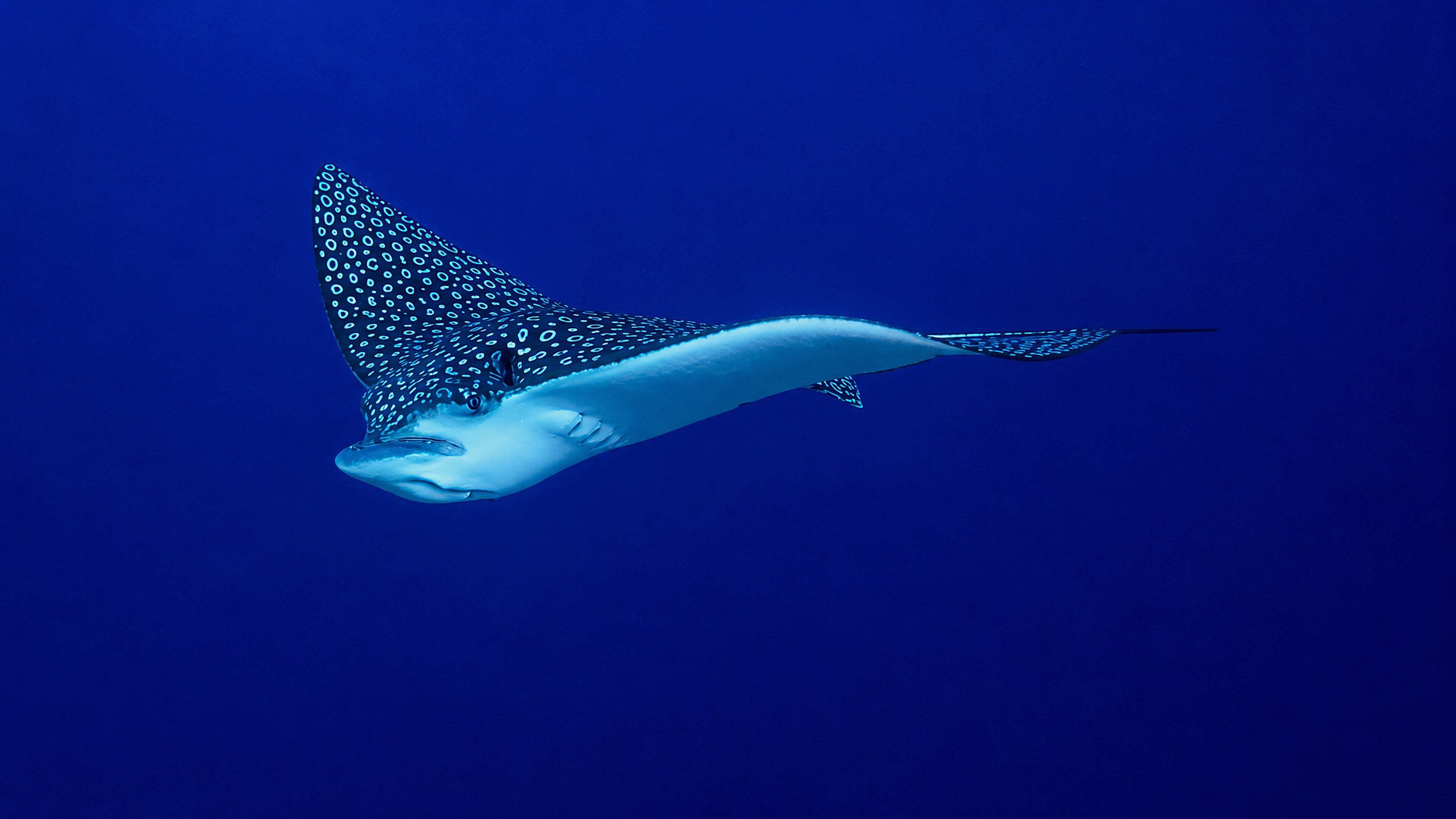
A close blue-water encounter shows the spotted pattern, broad wings, and long tail that make eagle rays one of the most recognizable animals in Cozumel water.
Winter Visitors

The eagle ray season is worth waiting for.

Spotted eagle rays are seen around Cozumel throughout the year, but winter and early spring often bring the encounters divers remember most.

During the cooler months, divers may see single rays, pairs, or larger groups travelling along walls and sandy channels. Cantarell Wall is especially known for winter eagle ray sightings, but patient divers may also encounter them above Palancar and other reef systems.

Feeding Behaviour

Searching beneath the sand.

Eagle rays are graceful swimmers and active hunters with keen senses
to locate prey like conch, and other shellfish hidden beneath the sand.

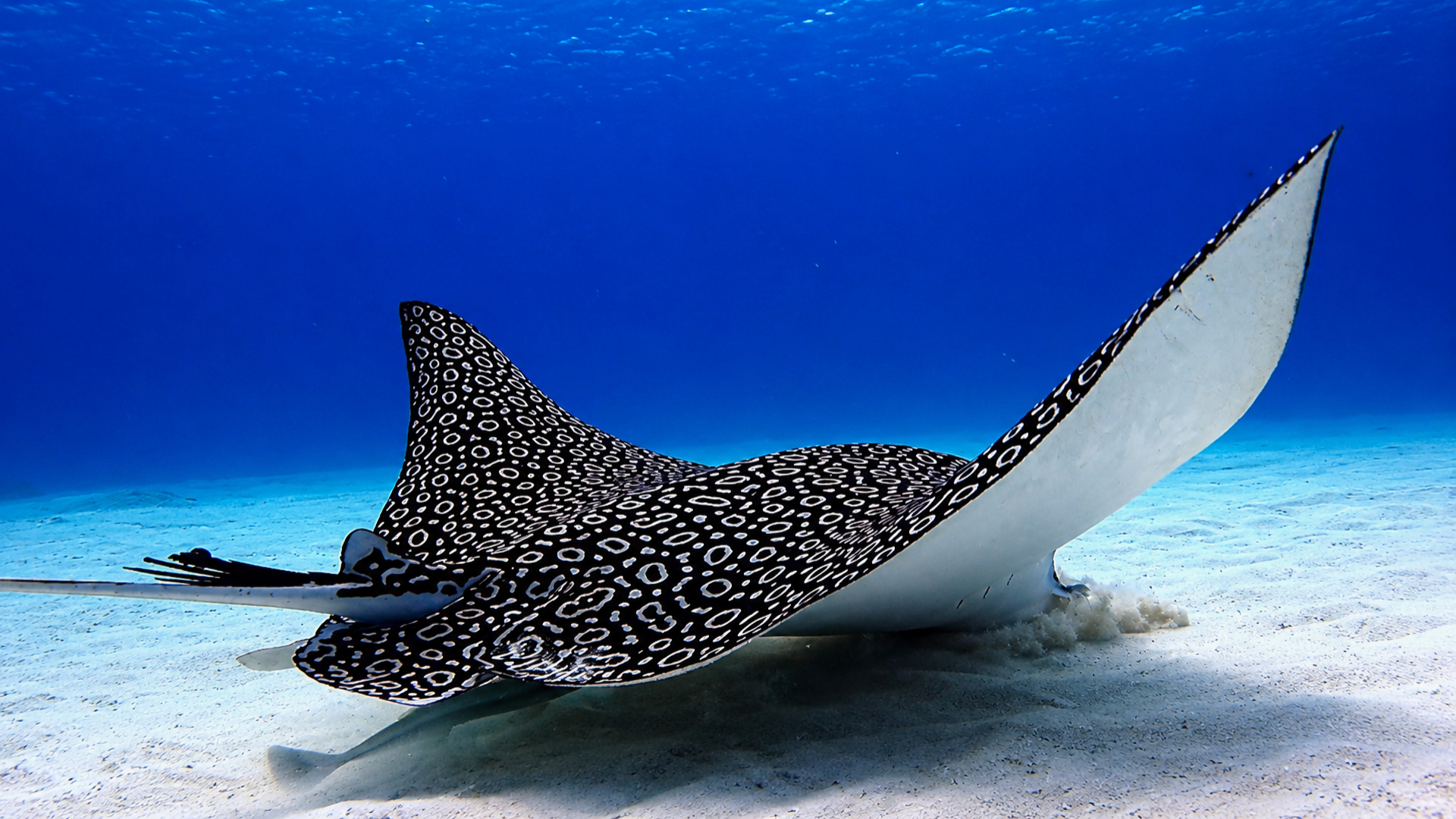
Spotted eagle ray stirring up sand while feeding
A burst of sand reveals the power of an eagle ray feeding on the bottom.
Eagle ray feeding above the sandy bottom
Feeding begins with a close search over the sand.
Eagle rays feeding together above the sand
When prey is discovered the digging begins and a meal is enjoyed.
Eagle ray lifting from the sandy bottom after feeding
After feeding, the ray lifts off and returns to the blue.
Groups and Movement

Sometimes the blue fills with wings.

A single eagle ray is unforgettable.
A group of them can feel almost unreal.
- a quiet procession crossing the reef -

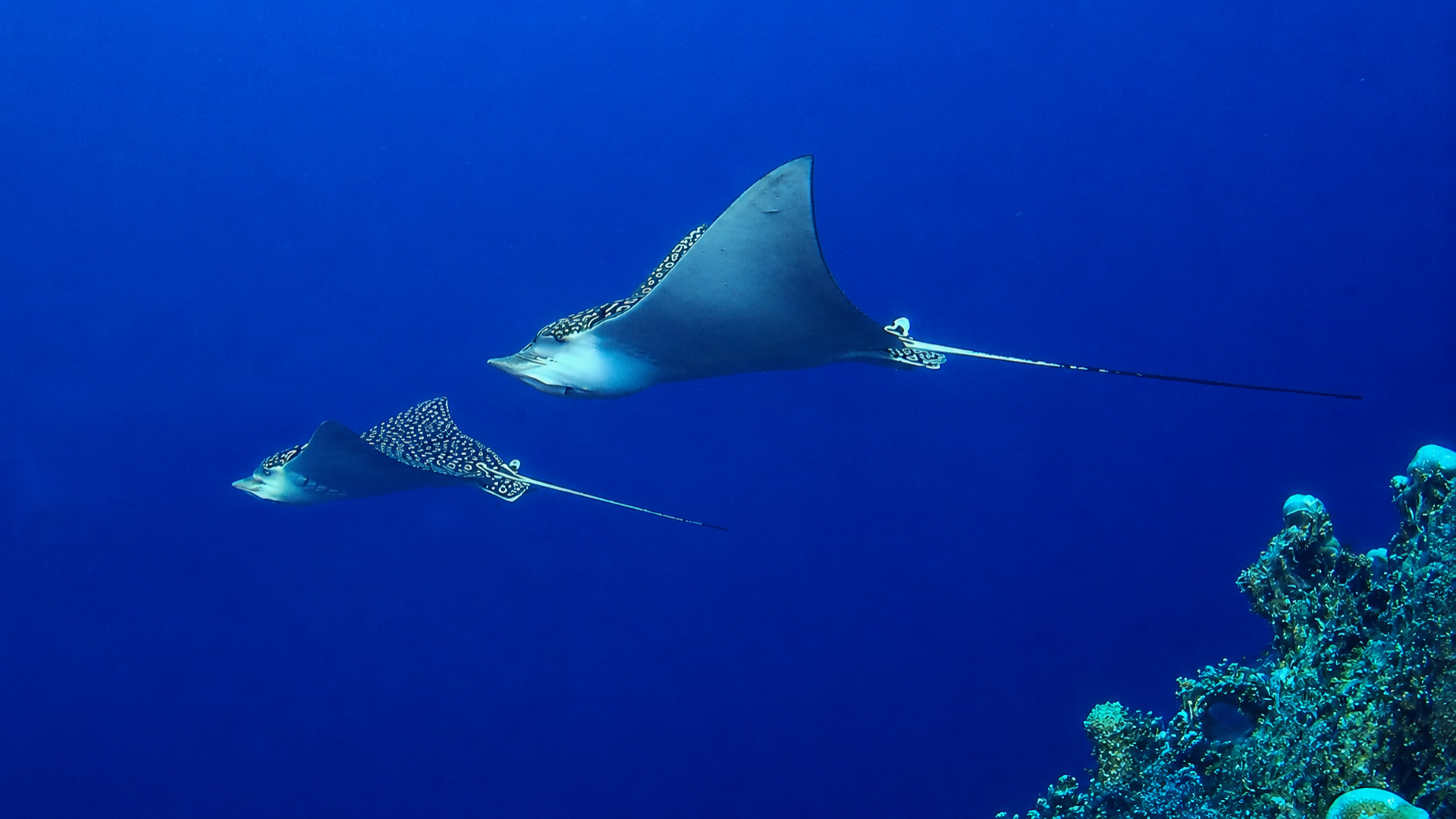
Two eagle rays moving together above the reef edge
Two rays travel together above the reef edge.
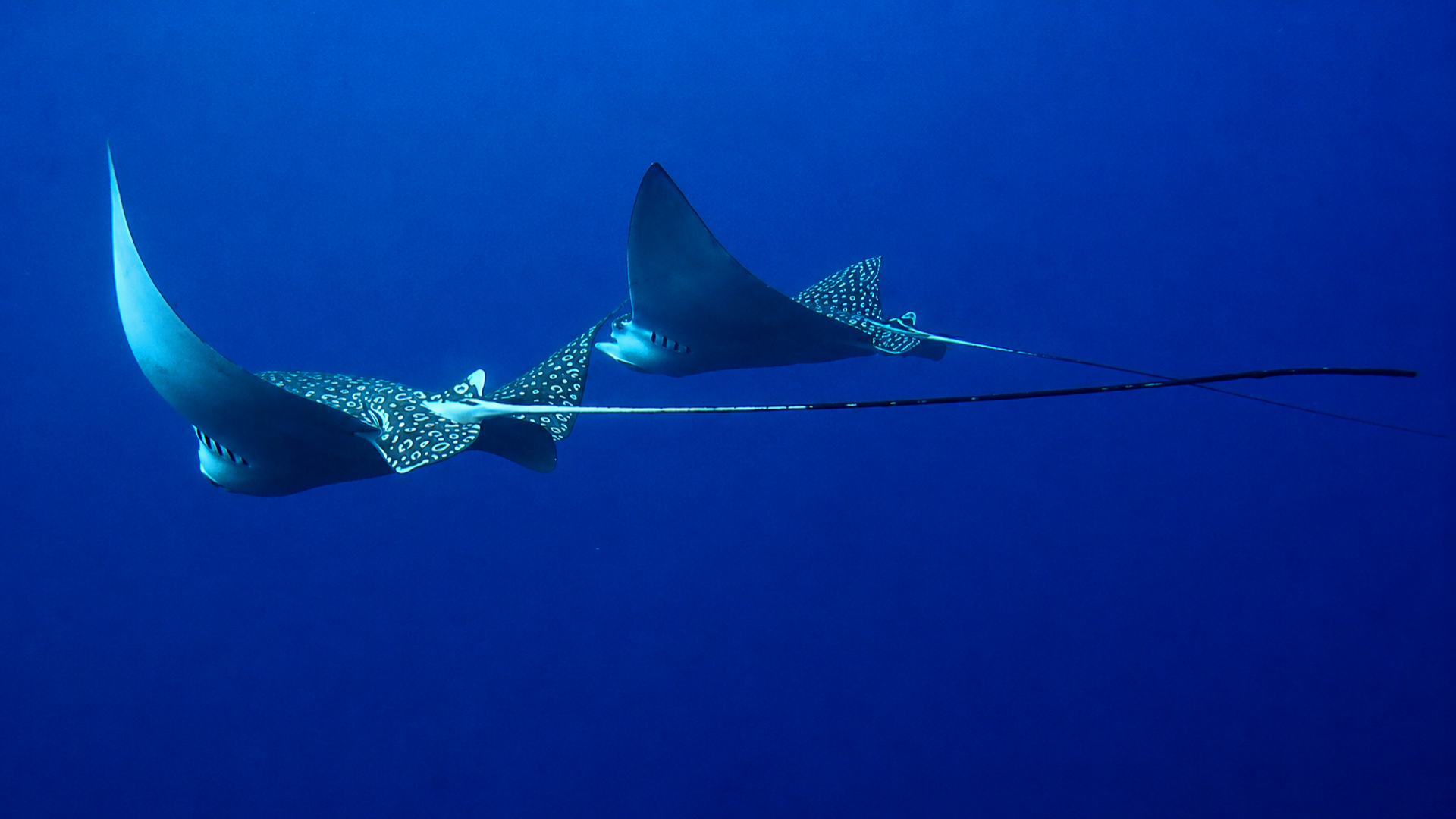
Two eagle rays gliding through open blue water
Paired rays glide through open blue water.
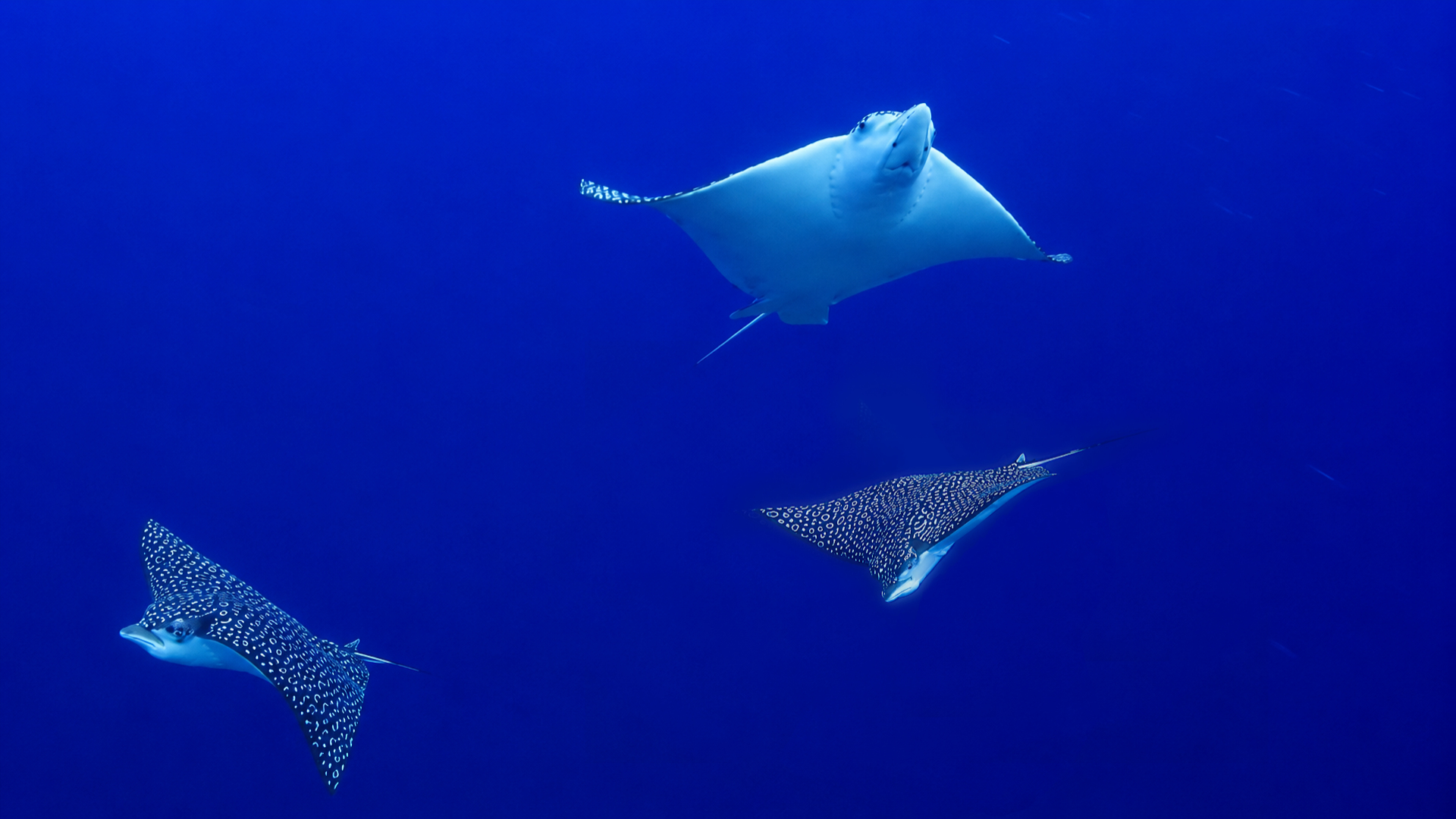
Three eagle rays moving away into blue water
A small group play in the deep blue.
Portraits from the Blue

Every angle reveals a difference.

The beauty of an eagle ray is not limited to one view. From the side, from below, or from behind, each angle reveals a different part of its shape, pattern, and movement.

Quick Facts

What divers are seeing.

Spotted Pattern

Each eagle ray has a pattern of white spots and markings across the back, making them visually striking against the blue water.

Powerful Feeders

They feed by searching the sand for buried prey and can create dramatic clouds of sediment while digging.

Graceful Travellers

Eagle rays often move with slow, controlled wingbeats, giving the impression that they are flying through the sea.

Eagle Ray Questions

Questions divers often ask

When is the best time to see eagle rays in Cozumel?

The best-known eagle ray season around Cozumel is generally during the winter and early spring months, when divers have a better chance of seeing pairs or larger groups along walls and sandy reef edges.

Where are eagle rays often seen?

Cantarell Wall is especially known for eagle ray encounters, but they may also appear along Palancar, sandy channels, reef walls, and blue-water edges where they travel or search for food.

Are eagle rays dangerous to divers?

Eagle rays are wild animals and should be respected, but they are not aggressive toward divers. Calm observation and giving them space is the safest and most rewarding approach.

Why do eagle rays sometimes come close?

Every encounter is different, but calm divers who avoid chasing, crowding, or blocking the animal's path often enjoy longer and more natural interactions.

What are they doing when they dig in the sand?

They are searching for buried prey such as conch, clams, and other bottom-dwelling animals. The sand cloud is part of the feeding process.

Should divers chase an eagle ray?

No. The best encounters happen when divers slow down, keep a respectful distance, and let the animal decide whether to stay, leave, or approach.

Respectful Encounters

Patience can bring you closer than a chase ever will.

Eagle rays do not owe divers an encounter. The goal is not to chase, surround, or force a photograph. The goal is to remain calm, watch carefully, perhaps follow respectfully and allow the animal to continue its life undisturbed.

When that happens, the photograph becomes more than a record of an animal. It becomes a reminder of a shared moment.

Continue Your Dive

Every reef has another story waiting to be discovered.

Explore more of Cozumel's marine life through personal encounters, underwater photography, and stories from the blue.

Explore More Featured Marine Life
Top ↑